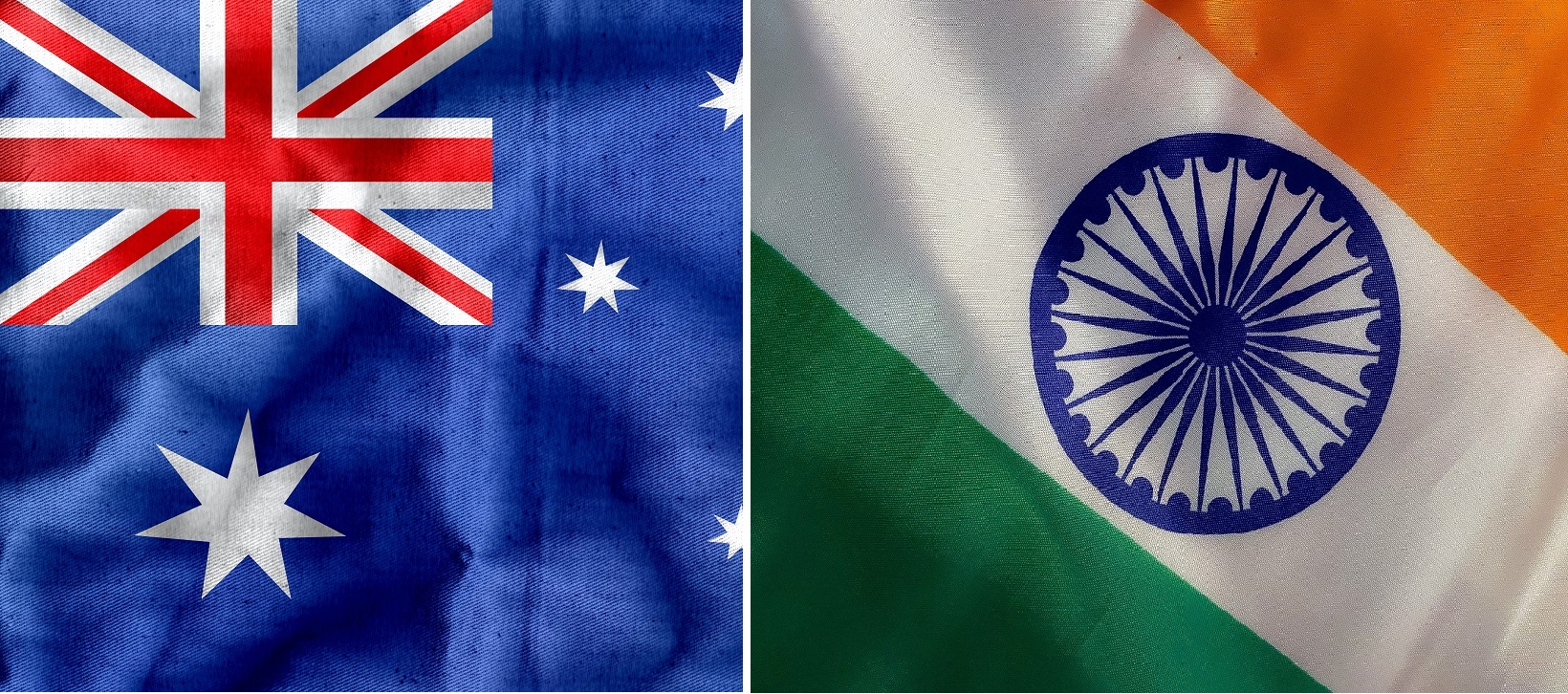
While the changing nature of international relations in recent years reshapes interstate relations, new dynamics affect the priorities of countries in foreign policy. In the current international order, which has evolved into a multipolar structure, the relations between India and Australia come to the fore. Indo-Australian relations, which were quite weak due to the different foreign policy they followed during the Cold War, changed direction after the 2000s. In this context, India, following a new and versatile foreign policy, especially with Western countries, has become a critical partner in the foreign policy of other states as a rising power. In particular, the increasing importance of the Indo-Pacific region and the alarming rise of China in the region have caused India to be seen as a balancing power. Therefore, the uncertainty in the region has brought New Delhi and Canberra closer together.
On the occasion of Australian Prime Minister Anthony Albanese’s visit to India between 8-11 March, the 75th anniversary of bilateral relations was celebrated. Prime Minister Albanese’s visit followed a series of high-level talks and mutual ministerial visits between the two sides. During his three-day visit to India, which covered three cities and seven speeches, Prime Minister Albanese also attended this year’s Holi celebrations. Prime Minister Albanese’s visit preceded the Quad summit in May this year. Prime Minister Modi and his counterpart Albanese discussed defense and trade issues, especially maritime security in the Indo-Pacific. In addition, on the occasion of the first face-to-face annual summit between the two countries, cooperation agreements were signed in many fields such as sports, film industry, solar energy and hydrogen technology.
Commercial relations
Relations between India and Australia have reached a level like never before in history. India has become Australia’s 6th largest trading partner. During Prime Minister Albanese’s visit, bilateral trade relations were discussed within the framework of the interim Comprehensive Economic Cooperation Agreement, which will take place at the end of this year. The interim agreement was ratified by both parliaments. In the context of the agreement, Australia offered India zero duty access for about 96% of its exports, while India removed tariffs on 85% of Australia’s exports. It is aimed to gradually increase this rate to 91%. On the other hand, Australian businessmen accompanying Prime Minister Albanese could not get the expected yield in commercial agreements due to India’s heavy tariff practices and commercial laws that protect the domestic market.
In line with Australia’s foreign policy goals, India, as well as Indonesia, has a serious importance. Therefore, India’s becoming a rising economic power and the search for new partners in order to reduce Australia’s dependence on China bring the two closer together. For this reason, Australia wants to diversify its trade links with India by spreading it to many different areas. For example, due to the climate crisis, green technology and digital economy are among these areas. India has ambitious targets to reach 50% renewable energy and 30% electric vehicles by 2030. Modi’s desire to make India a developed country by 2047 and breakthroughs in the digital economy are also attracting Australia’s attention.
Security cooperation
The increasing importance of the Indo-Pacific and the growing Chinese threat in the region are increasingly strengthening the strategic alliance between India and Australia in the fields of security and defense. The Indian Ocean is central to the security and welfare of both countries. Both countries desire a “free, open and inclusive” Indo-Pacific. Under these new parameters, Prime Minister Albanese described India as a “top security partner” for Australia.
The dimensions of cooperation in the fields of Indo-Australian security and defense are gradually expanding. The developments in the Talisman Saber War Games and Operation Malabar demonstrate this. First, Prime Minister Albanese announced during his historic visit to India’s first indigenous aircraft carrier, INS Vikrant, that Indian forces will participate in this year’s Talisman Saber War Games to be held in Australia. Such a first visit by a foreign leader is seen as a strong symbol of New Delhi’s willingness to further consolidate its strategic ties with Canberra. The Talisman Saber War Games, which started in 2005, are held every 2 years. It is a formation that tests the ability of the USA, Canada, Japan, New Zealand, South Korea and the United Kingdom to act jointly against the crisis and unexpected developments. In the last game held in 2021, thousands of personnel from many countries, including member countries, participated in the war games. In addition, India, Indonesia, Germany and France participated in the Talisman Saber War Games as observers in 2021. While it is not yet clear how many Indian personnel will take part in this year’s war games, Australia has been pressing for India to join since 2021.
Alongside the Albanese war games, the Prime Minister announced during his visit to India that this year, Australia will host Operation Malabar for the first time. Operation Malabar, in which the USA, India and Japan will also participate, indicates that the Quad countries have a high desire to increase cooperation in line with their interests in the region. The fact that Australia will host Operation Malabar for the first time shows how attitudes have changed in New Delhi. Because India had resisted the pressure of Australia to participate in the exercise and limited Australia to the observer role. However, the defense relations of the two countries, which carried out their first joint naval exercises in 2014, expanded rapidly. In June 2020, the strategic partnership between the two has been upgraded to a comprehensive strategic partnership.
Another issue that can change the dynamics of India-Australia security and defense cooperation is the nuclear submarine technology that Australia will develop within the framework of Aukus. As a result of the project, which constitutes the most complex and expensive defense project in Australian history, it plans to purchase its first nuclear submarine in 2030. On the other hand, the nuclear submarine project, the largest defense investment in Australian history, developed to maintain stability in the Indo-Pacific region and described as a “game changer” by US President Biden, is making Beijing quite uncomfortable.
In addition to these developments, there are obstacles in the way of security relations between India and Australia. India’s proximity to the Kremlin and its dependence on Russia, especially in the defense industry, is one of the important issues on which it differs from Australia. Therefore, the depth and dependency in Indo-Russian relations will also affect the direction of Delhi-Canberra relations. India’s first indigenous aircraft carrier, the INS Vikrant, which Prime Minister Albanese visited, is also partly based on a Russian design. However, India plans to establish its own defense industry as it sees its dependence on Russian defense imports as a major strategic vulnerability. Because India sees its defense industry as the key to improving its self-reliance.
Cricket diplomacy
Cricket is a very important sport in India and Australia. Considering the relationship of sports with politics and foreign policy, cricket has become both a political force and a tool of diplomacy for both countries. Cricket is a diplomatic tool that India has used for more than 30 years. Prime Minister Albanese’s visit to India coincided with the India-Australia 4th cricket test match and the leaders of the two countries watched the match at the Narendra Modi Stadium. They even took a tour of honor at the stadium to celebrate the 75th anniversary of bilateral relations.
The relationship between cricket and politics in India is quite strong. Political parties have a strong hold on the Gujarat Cricket Association (GCA), which is subordinate to the extremely powerful The Board of Control for Cricket in India (BCCI). Even in 2009, Narendra Modi was unanimously elected president of the Gujarat Cricket Association before becoming Prime Minister. On February 24, 2021, the name of the stadium where Prime Minister Albanese was hosted in Gujarat was changed to Narendra Modi Stadium by the Gujarat Cricket Association.
The hosting of Prime Minister Albanese at the cricket match in Gujarat is of particular importance to the Modi government. Because Gujarat is both the hometown of Prime Minister Modi and the place where he was the chief minister of the state that brought him to power. Cricket is the most loved and watched sport in Asia. Also, Indo-Australian cricket matches are one of the most followed. The Indo-Australian cricket test match in Ahmedabad, on the other hand, has become a diplomatic tool that brings the two countries closer.
Domestic policy issues
One of the important parameters in India-Australia relations is the increasing population of the Indian diaspora in Australia. The population of Sikhs, especially among the members of the Indian diaspora, increased by about 60% between 2016-2021. In terms of India, the diaspora issue in Australia has come to the forefront due to the fact that pro-Khalistan Sikh separatist groups (especially the US-based Sikhs for Justice) hold referendums in countries with a high Sikh population such as Canada and Australia. In January, three Hindu temples in Melbourne were targeted by Sikhs ahead of a vote in a non-binding referendum on Khalistan, prompting pro-India groups to protest in Federation Square. The Modi government banned the Sikhs for Justice for their “anti-Indian activities” and classified them as a terrorist group. The Indian High Commission in Canberra is also pressing Australian authorities to halt the referendums, arguing that pro-Khalistani groups fuel religious hatred and threaten India’s territorial sovereignty. However, the fact that Australian officials and politicians defended the right of Khalistan supporters to hold protests and political meetings has greatly disturbed India. During Prime Minister Albanese’s visit, the issue was discussed between the leaders of the two countries. However, since these developments also concern the domestic politics and internal security issues of the two countries, they touch on a very sensitive point and affect the course of bilateral relations.
Prime Minister Albanese’s visit to India took place at a critical time for Australia. The visit was made prior to the Talisman Saber War Games and Operation Malabar, which will take place for the first time in Australia this year. In addition, Prime Minister Albanese signed the nuclear submarine project, which is the largest defense investment in its history, within the body of Aukus, right after his visit to India. Therefore, Prime Minister Albanese’s visit to India is significant before the developments that will increase Australia’s effectiveness in the Indo-Pacific. While the new developments shaped in the international arena after the Cold War bring the two countries closer than ever before in their history, the different priorities of the countries in both domestic and foreign policy make it necessary for the parties to better understand each other.