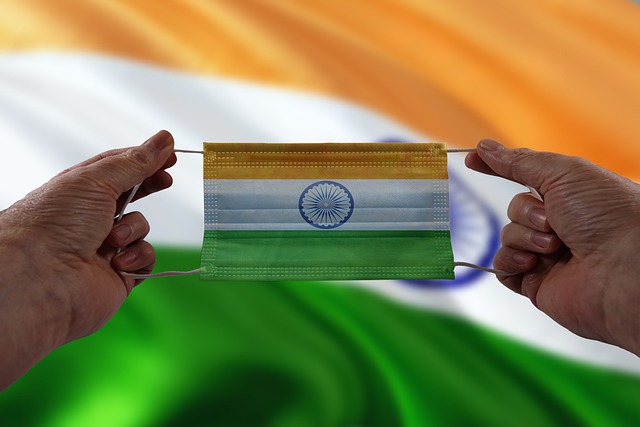
The world is still struggling with the Covid-19 pandemic. A new one is added to the fight of people with the aforementioned virus with new mutants. The UK mutant, the Brazilian mutant, now the Indian mutant… WHO announced that a new coronavirus mutant called the Indian variant was detected in at least 17 countries. India, on the other hand, is very uncomfortable that the new Covid-19 variant, which is thought to cause the second wave, is called the Indian mutant. It prefers to call it “double mutant” instead. So how did a second wave put the country into a serious health crisis?
First of all, the data show that the virus spread faster in the second wave than the first wave in India and the case increase rate is lower than the first. In addition, the second wave affected not only the country but only 8 states, especially important cities such as Delhi, Mumbai, Lucknow and Pune. Experts attributed the rapid decline of Covid cases after the first wave in September 2020 to factors such as the high natural immune system of the Indian people (lack of adequate environmental cleanliness compared to developed countries, frequent incidence of diseases such as malaria, typhoid and dengue fever), the country’s hot climate, and its high young population. However, in the second wave, it was observed that children and young people were more affected with new symptoms. Most importantly, the serious crisis experienced due to the shortage of oxygen, medicine, hospitals and healthcare workers left its mark on the second wave. Oxygen cylinders could not be found even in large hospitals and five-star hotels in Delhi. The budget, which never exceeds 4%, which India has allocated for the health sector was questioned. In addition, while the poor were more affected in the first wave, the middle class and elites joined them in the second wave. After the crisis in the field of health and economy, it reflected on the political arena.
For example, despite the oxygen crisis in the country, politicians argued that this is not true. It was stated that the problem was not due to lack of oxygen, but because of the inability to provide interstate logistics support. But, as if the government was false, the political leader of Delhi, one of the cities most affected by the second wave, Arvind Kejriwal demanded that the oxygen crisis reached serious dimensions and that the center urgently provide oxygen supplements to Delhi. However, Harsh Vardhan, Minister of Health and Family Welfare and current WHO Chief Executive Officer, announced that India had prepared better against Covid-19 this year compared to 2020, and that despite the high number of deaths, with a rate of 1.11%, India has the lowest rate of Covid deaths in the world. UP state leader Yogi Adityanahth’s statement that action would be taken against hospitals that made false claims of oxygen shortage was also quite thought-provoking. The Indian government did not acknowledge that the #ResignModi campaign launched on social media by those who thought the government was unable to manage the current crisis was blocked by them.
On the other hand, due to the unpredictable dimension of the second wave crisis, criticism of some segments, especially the opposition parties, point at the government. It was stated that the second wave turned into a huge crisis due to the inability of the government to monitor what is happening in the world and the possibility of the virus returning more violently, due to the lack of foresight and preparation. Because, after the first wave was over, it is thought that the statements of the Minister of Health at the beginning of March that India defeated the coronavirus and the vaccination campaign that started in January have also compromised the public. In recent months, the images that large crowds gathered for political rallies organised due to state elections such as Bengal, Kerala and Assam, religious celebrations (especially the Kumbh Mela with 9.1 million pilgrims), weddings and cricket matches do not obey the masks and social distance rules also justify these criticisms.
Another issue was the malfunctions in the federal system of the country. The biggest reason for this is that an extreme centralisation policy has been motivated by the Modi government. One of these clearest examples in the second wave crisis that the prices of vaccines purchased from the supplier varied by center and states. So the central government was punishing the states in a way financially. Moreover, as of May 1, vaccine sales have been liberalised and dereguleted. This will make vaccines more expensive and prevent millions of the poor from accessing vaccines. Besides Covid drugs, especially Remdesivir, which has not been proven to be effective but are widely used, went on the black market. Again, the images of the corpses burned in the streets and the use of dog crematoriums showed that the death numbers announced did not reflect the truth. These were all serious facts for those who criticised the Modi government’s failure to manage the second wave crisis.
It was also noteworthy that the Indian Army was involved in the crisis period. The Delhi government has asked the military, which has traditionally stayed away from government affairs, to manage Covid care facilities and intensive care units. For this purpose, all healthcare professionals of the armed forces, including retired and early retired in the last two years, were called to take part in the Covid crisis. Since the issue of health is under the initiative of the states, measures have been taken on the basis of the states for now, in line with the current situation. However, it is believed that a new national lockdown decision will not be taken, as the general lockdown resulted in a great failure.
In terms of foreign policy, India has followed vaccine diplomacy and managed to provide hydroxychloroquine to more than 100 countries and approximately 65 million doses of vaccine to more than 80 countries. But the destructive course of the second wave caused vaccine exports to cease. Following a relatively successful vaccine diplomacy, India had to accept foreign aid for the first time in 16 years due to the huge health crisis it faced. In addition, aid came from other countries (as US, UK, France, Germany, Russia, Ireland, Belgium, Romania, Luxembourg, Portugal, Sweden, Australia, Bhutan, Singapore, Saudi Arabia, Hong Kong, Thailand, Finland, Switzerland, Norway, Italy, UAE) for the supply of health equipments. All of this had led to Modi’s criticism of Aatmanirbhar Bharat (self-reliant) campaign, questioning the reality of the program, and even interpreting it as a political nationalist discourse. For the current situation shows that the country has a far more way to call for a “self-reliant India” than expected. For example, while vaccine production should continue on the one hand, it is dependent on the US in this regard. For example, India cannot reach the necessary materials for vaccine production due to the vaccine policy of the US. Strategic partner America was very hesitant about aid, softened its firm stance in vaccination policy due to calls from the Indian diaspora in the US and international pressure and agreed to help India. Although it was not interpreted as a strategic step, the aid it promised reached the country with a delay.
Another example can be given in relation to China. India’s importing most of its medical equipment for Covid from China is a separate contradiction for Modi’s “self-reliant India” discourse. 98% of the oximeters in the country are of Chinese origin. On the other hand, despite the anniversary of the India-China border dispute, the issue is still not clear and the military dialogue process between the parties has been interrupted. In the midst of a new Covid crisis, a possible attack by China was a secret concern, reminding last year, that China offered India assistance with vaccines and health equipment. Moreover, news spread that China was mocking of India about the second Covid wave, despite the backing. Therefore, India’s relations with China are on the axis of suspicion and dependence.
As a result, the second wave in India, a rising country, creates a new ranks of unemployed, the number of which reaches 7 million, the emergence of bad administration due to excessive centralisation, the serious disruptions in the health system (such as the vaccine shortage as the largest vaccine producing country in the world) and the increase in poverty will of course question the place of a country in the global arena. Yet crises also bring opportunities. In this context, India should make an urgent self-assessment and take action in this direction.