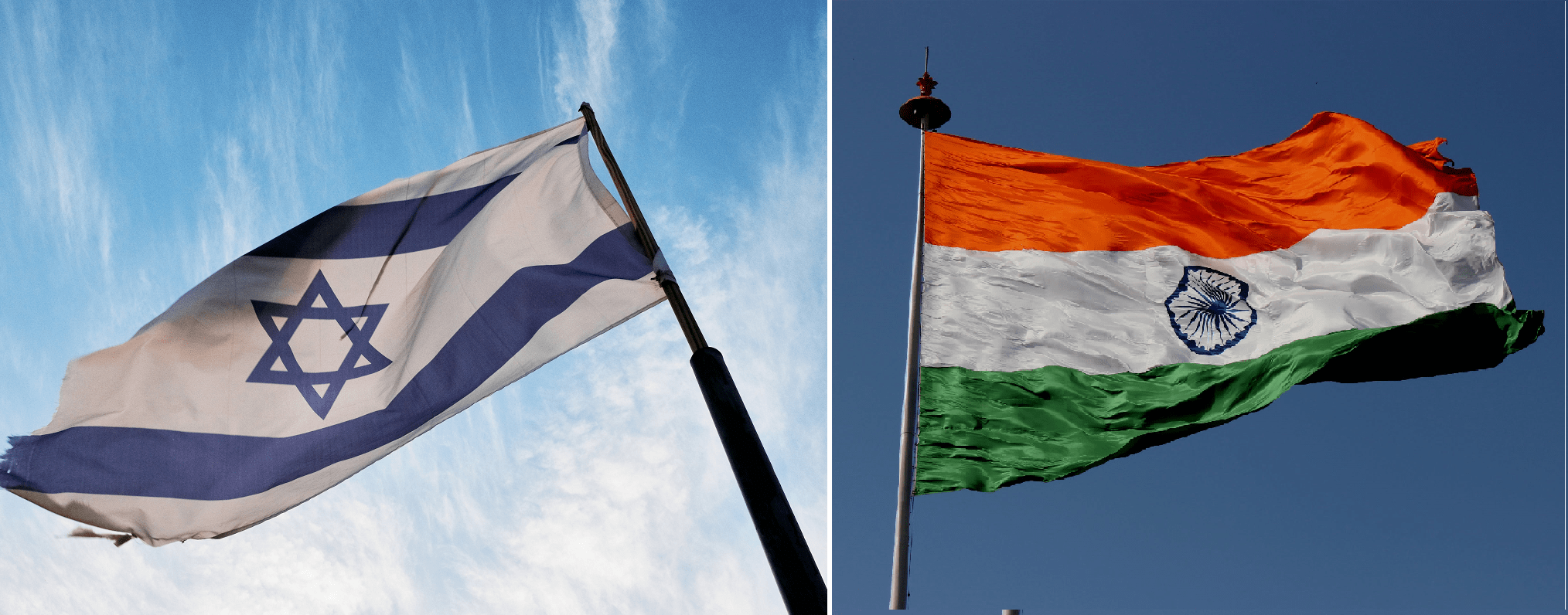
After the Israel-Gaza war, India-Israel relations attracted attention again. Because India was the only Asian country that did not vote in the ceasefire vote held at the UN in October 2023. The words of Indian Prime Minister Modi, who quickly declared his support for Israel after the start of the war, on social media showing his open support for Israel, led to comments that India’s pro-Palestinian stance had changed greatly. Although it is thought that India’s close relations with Israel are behind this U-turn on Palestine, there are important points that are overlooked. In this context, some questions need to be answered to capture the big picture.
Indian Foreign Policy and Israel
First of all, the first question to ask is whether India’s foreign policy has changed since independence. It is essential to understand this issue in order to understand the changing course of India’s relations with Israel. Until the nineties, Indian foreign policy adopted a Non-Aligned stance. India, the leader of the Third World countries, did not choose a side in the bipolar world order, but its closeness with the Soviets always disturbed the second pole leader, the USA. With the collapse of the Soviet Union in the nineties, India could not remain indifferent to the pressure of the USA and entered a process of rapprochement with the West. Especially in this period, the serious economic difficulties experienced by the country also triggered the foreign economic liberalization process. New developments, both internally and externally, caused India to revise its Non-Alignment policy. Many academics and analysts interpreted this revision process as change. However, what actually happened was India’s attempt to “adapt” to the new international order.
One of the most striking moves of India’s adaptation effort was its rapprochement with Israel. Since a unipolar order emerged after the collapse of the Soviets, it would not be correct to interpret India’s rapprochement with the West, especially the USA, in the context of old global dynamics. Therefore, India transformed its Non-Alignment policy into a Multi-Alignment strategy in the new international structure. The focus of India’s relations with West Asia (Middle East) has shifted from Arab countries to Israel. Lobbying activities in the USA also played an important role in the development of bilateral relations. On the other hand, the role of the USA in the rapprochement of these two countries should not be ignored. Because India serves as a gateway for the USA in both the Middle East and the Far East.
India-Israel Relations
A second question that needs to be answered is what are the dynamics that bring India closer to Israel. Issues such as India’s support for Palestine, the influence of Indian Muslims, the Non-Alignment policy, the Pakistan factor, the closeness with the Soviets, the Kashmir issue and the economic dependence on Arab states were the basic elements that shaped New Delhi’s relations with Israel. Although India recognized Israel in 1950, it did not send an ambassador. Until its relations with Israel gained momentum after the Cold War, India followed a pro-Palestinian foreign policy. The desire to protect the Caliphate in the 1920s brought Indo-Arab relations closer. In addition, the anti-colonial stance nourished this rapprochement. Mahatma Gandhi and Jawaharlal Nehru saw Zionism as an ideology that enabled the establishment of the state of Israel in Palestine. In 1974, India became the first non-Arab state to recognize the Palestine Liberation Organization as the sole and legitimate representative of the Palestinian people. They were one of the first countries to recognize the State of Palestine in 1988. In 1996, it opened a representative office in Gaza, then moved to Ramallah in the Israeli-occupied West Bank. On the Israel-Palestine issue, India supported the two-state solution.
However, the international conjuncture that changed with the collapse of the Soviets brought China closer to Israel. In this context, India’s relations with Israel began to change in 1992, immediately after China’s move towards Israel. The course of its relations with Arab countries was also effective in India’s rapprochement with Israel. Although India supported the Arabs in the 1967 and 1973 Arab-Israeli wars, New Delhi could not find the support it sought from the Arabs in many issues, such as the 1962 Indo-China War, the 1965 Indo-Pakistan War, the cancellation of the official delegation invitation of the Islamic Summit Conference (Organisation of Islamic Cooperation) to India in 1969, and the 1971 Bangladesh War. On the other hand, Israel supported India on the Kashmir issue and in its wars with Pakistan.
India, which adopted the law that Zionism should not be seen as racism in December 1991, exchanged diplomats when it did not receive any negative reaction to this move. In 2003, Ariel Sharon became the first Israeli prime minister to visit India. During this period, Israel was India’s second largest arms supplier after Russia. In 2017, India made its first official visit with Prime Minister Modi. However, India’s support for Israel should largely be interpreted in the context of realpolitik. Because Israel is India’s largest arms supplier, including unmanned aerial vehicles, radars and missile systems. The two countries have collaborated on joint defense R&D projects in sectors such as technology and innovation. Commercial ties have developed, especially with the increasing presence of Indian software companies in Israel. The close relationship between Netanyahu and Modi also plays an important role in the development of relations between the two countries.
Although India is expected to take a clear stance in the October 2023 Israel-Gaza war, the country’s foreign policy history proves that this expectation is misplaced. In many cases, such as the USA’s invasion of Iraq and Russia’s invasion of Ukraine, India always preferred to remain “neutral”. Moreover, India did not hesitate to follow its own values and interests on the points where it was asked to take sides. For example, against Western pressure in the 2022 Russian invasion of Ukraine, India improved its diplomatic and commercial relations with Russia, doubling trade and an increase of approximately 120%. He won the West’s favor by selling them the crude oil he bought from Russia. In the Israel-Gaza war, although India seemed to openly show its side, it abstained from the vote at the UN for an emergency humanitarian ceasefire and sent humanitarian aid to Gaza with its contributions to UNRWA (annual aid of 5 million US dollars). He voted in favor in the UN vote held in December. India has a long tradition of supporting Palestinian rights. Therefore, the fact that the Indian government was one of the countries that quickly condemned Hamas and abstained from the vote in the UN attracted great reaction.
Illusion of Hinduism-Judaism Similarity
The last question is what is the role of religion in the rapprochement of the two countries. The strengthening of India-Israel relations has brought about discourses about the ties between Hinduism and Judaism, which are quite different from each other. The distant approach of Jewish scholars towards Hinduism, dating back to ancient times, began to change with the emergence of spiritual movements in the 1960s. These movements fueled the interest in Eastern religions in the West. In this regard, the role of Hindu gurus who went to the West in the same period is great. Additionally, Mira Alfassa, Paul Brunton, Suleyman S. Cohen, Maurice Frydman (also known as Swami Bharatananda) and Abraham Jacob Weintraub (known as Swami Vijayananda) are among the important Jews who played a role in Hindu religious movements.
The interreligious dialogue that started in the 1990s nourished the efforts to recognize both religious teachings. Religious organizations such as the Elijah Board of World Religious Leaders and Religions for Peace brought together leaders of all religions. Studies on Hinduism and Judaism are also carried out academically. While comparative studies are being carried out between these religions, a journal called the Journal of Indo-Judaic Studies publishes academic studies for this specific purpose. Israel is the only country in the world where more than 90% of students attending introductory Hinduism and India courses have visited India.
On the other hand, India has always been a safe haven for Jews. Today, Indian cities such as Mumbai, Cochin and Calcutta are among the important centers where Jews live. For example, there are Bene Israel Jews in Mumbai, whose existence dates back to the 18th century. Additionally, Mumbai is home to 10 synagogues. Again, the village of Dharamkot, where Jews live in the Himachal Pradesh state of India, is known as the “hills of Tel Aviv” and the village of Kasol is known as “mini Israel”. Despite all these developments, there was no meaningful interaction between Hinduism and Judaism.
In addition to the developing political relations between India and Israel, religion is used as a public diplomacy tool. However, the effort to find interaction between religious beliefs that are quite different from each other, such as Hinduism and Judaism, cannot go beyond presenting similar features that can be found in almost every religion. Considering all this, the only similarity that can be mentioned is the ethnic nationalist agenda nourished by both religions. Therefore, claims of socio-religious affinity made in the name of nationalist agendas will only harm these religions.